
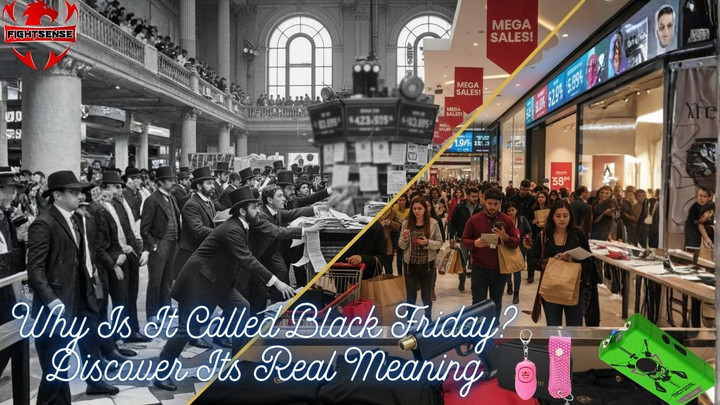
Why Is It Called Black Friday? Discover Its Real Meaning
20th Nov 2024
Discover why it’s called Black Friday — from 1869’s financial chaos to today’s mega sales. Uncover its history, meaning, and Fightsense Black Friday safety deals!
Introduction
Black Friday — the phrase instantly brings to mind massive sales, buzzing stores, and unbelievable discounts. But have you ever wondered why it’s called Black Friday?
Let’s uncover how this term evolved from financial panic to the world’s biggest shopping event — and why it matters today.
Keynotes
- Originated in 1869 during a U.S. financial crisis.
- Gained modern use in 1950s Philadelphia after Thanksgiving chaos.
- Retailers used “Black Friday” for turning losses (red) into profits (black).
- Now a global event, including Cyber Monday for online sales.
- Despite its success, over-commercialization and workplace strain spark ethical debates.
The Early Origins of Black Friday
The term “Black Friday” first appeared in 1869, but not in a retail context.
That year, financiers Jay Gould and James Fisk tried to manipulate the gold market. Their plan collapsed, triggering a financial panic — hence the label Black Friday.
While this event marked the term’s birth, it had nothing to do with shopping. The retail version of Black Friday would appear almost a century later.
Why Is It Called Black Friday in Modern Times?
1. Philadelphia’s Role in Naming
In the 1950s, Philadelphia police used the term Black Friday to describe the post-Thanksgiving chaos — when tourists and shoppers flooded the city for the Army-Navy football game.
Traffic jams, packed sidewalks, and long shifts for officers made it a nightmare. Retailers once tried calling it “Big Friday,” but Black Friday stuck — and soon spread nationwide.
2. From Red to Black — The Retail Connection
The most common explanation today lies in accounting.
For much of the year, stores operated “in the red” (losses). The surge of sales after Thanksgiving finally pushed them “into the black” (profits).
Thus, Black Friday became a symbol of financial success — marking the start of the holiday shopping season.
Black Friday in Popular Culture
Over time, Black Friday evolved into a cultural and retail phenomenon:
- Retail Revolution: 1980s retailers turned it into a marketing event with record-breaking sales.
- Global Reach: Now celebrated in the UK, Canada, Pakistan, and beyond.
- Digital Shift: Online deals birthed Cyber Monday, extending the excitement to the digital world.
? Shop Fightsense Black Friday Deals Now!
Get premium self-defense gear, pepper sprays, and small stun guns at unbeatable prices — because safety should never wait.
? Get Yours Now at Fightsense.com
Get Yours Now!
The Emotional Appeal of Black Friday
Black Friday’s power lies not just in deals but in emotion and experience:
- ⏰ Urgency: Limited-time offers fuel FOMO and fast decisions.
- ??? Social Tradition: Many families shop together, turning it into a holiday ritual.
- ? Economic Boost: The day injects billions into global economies.
This mix of emotion and economics keeps Black Friday alive year after year.
Modern-Day Challenges
Despite the excitement, Black Friday faces criticism:
- ⚠️ Over-Commercialization: Critics say it overshadows Thanksgiving’s spirit.
- ? Environmental Impact: Excess packaging and shipping raise sustainability concerns.
- ? Workplace Strain: Retail workers often sacrifice holidays for long shifts.
These issues have inspired many to embrace ethical, mindful shopping practices — including supporting brands that value safety and responsibility, like Fightsense.
Why Is It Called Black Friday Today?
Today, Black Friday represents more than sales — it’s a bridge between history, economy, and culture.
What began as financial chaos has become a celebration of savings and progress.
For businesses, it’s the most profitable day of the year.
For shoppers, it’s the kickoff to holiday excitement — with smarter, safer, and more conscious choices.
Fun Facts About Black Friday
- ?️ Black Friday has been the busiest U.S. shopping day since 2005.
- ? Many stores now run “Black Friday Week” events.
- ? It inspired global counterparts like Singles’ Day (China) and Boxing Day (UK, Canada).
FAQs About Black Friday 2024
1. Why is it called Black Friday?
It was originally used by Philadelphia police in the 1950s to describe post-Thanksgiving chaos. Later, retailers adopted it to symbolize moving from financial losses (red) to profits (black).
2. When is Black Friday 2024?
Black Friday 2024 falls on November 29, the day after Thanksgiving in the U.S., marking the official start of the holiday shopping season.
- Is Black Friday only in the U.S.?
No — it’s now a global shopping phenomenon. Countries like Canada, the UK, Australia, and Pakistan also celebrate it with both in-store and online deals.
4. What’s the difference between Black Friday and Cyber Monday?
Black Friday focuses on in-store and online discounts, while Cyber Monday (the following Monday) is mainly for e-commerce deals.
5. Are Fightsense Black Friday deals available online?
Yes! You can shop all Fightsense Black Friday deals online — from pepper sprays to small stun guns — at unbeatable prices directly on Fightsense.com.
6. How can I shop safely on Black Friday?
Shop only from trusted sites like Fightsense.com, use secure payment methods, and stay alert when shopping in crowded areas. Safety — both online and offline — always comes first.
Quick Recap
- ?️ Term originated in 1869, popularized in 1950s Philadelphia.
- ? Named for retailers moving from “red” (loss) to “black” (profit).
- ? Now a global shopping celebration — both in stores and online.
- ?️ Fightsense offers safe, smart Black Friday deals for everyone.
Conclusion
So, why is it called Black Friday?
From its roots in financial chaos to today’s worldwide shopping celebration, it’s a story of transformation, culture, and commerce.
Shop wisely, stay protected, and make the most of this year’s deals — only at Fightsense.
?️ Stay Protected — Shop Smart — Choose Fightsense.
Disclaimer
This blog is for informational purposes only. While efforts are made to ensure accuracy, readers should verify facts for academic or professional use.